

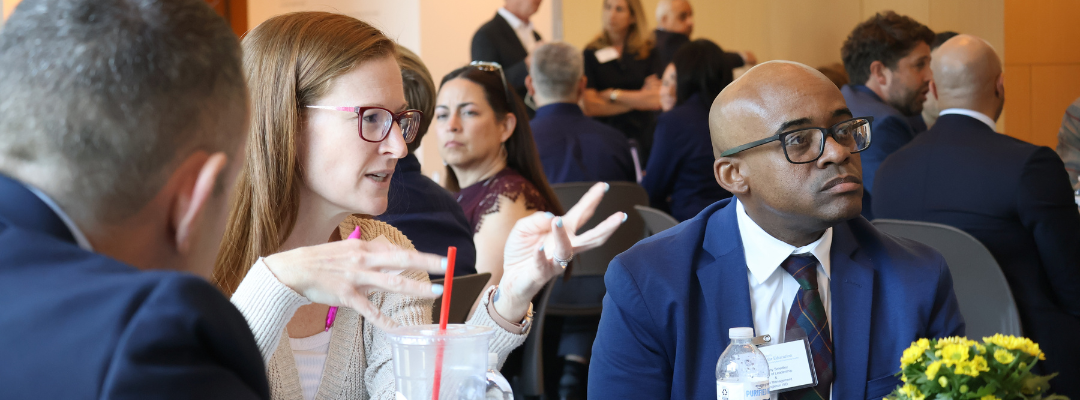
More than 80 education leaders gathered at Rice University’s Anderson-Clarke Center on April 28 for the Education Partners Luncheon, a collaborative forum hosted by the Susanne M. Glasscock School of Continuing Studies’ Center for Education. The event brought together teachers, principals, administrators, philanthropic funders, and Glasscock School staff and advisory board members to share ideas, discuss challenges and highlight progress in Houston-area education.
Brenda Rangel, assistant dean of the Rice Center for Education in the Glasscock School, said the gathering reflected the power of educators' shared purpose. “When educators, school leaders and partners come together with a common focus on student success, we can turn conversation into collaboration and ideas into action,” Rangel said.
The luncheon program highlighted the center’s commitment to access, preparation and equity, three principles that guide its mission. Attendees heard about the center’s four divisions — School Literacy and Culture, the Center for College Readiness, the Rice University School Mathematics Project and the Rice Education department — and how each supports student and teacher success across the Early Childhood (EC)-12 continuum.
This presentation also highlighted many new initiatives aligned with the Glassock School’s strategic plan and Rice’s “Momentous” strategic plan, with its key driver, “Build Thriving Urban Communities.” Participants learned about the center’s progress through these plans, which have led to new programming, such as the EC-3 Alternative Teacher Certification and the Rice Minor in Teaching, as well as new partnerships with the Barbara Bush Houston Literacy Foundation and Teach for America Houston.
"There are many factors that make a community thrive, but perhaps the most fundamental is education," said Robert Bruce, dean of the Glasscock School. "Where educators are equipped and supported, students succeed. And where students succeed, communities thrive. So, as we’ve sought to fulfill our strategic commitments, we’ve had a strong focus on addressing the most pressing education needs across the region and partnering with schools, districts and organizations who share our vision."
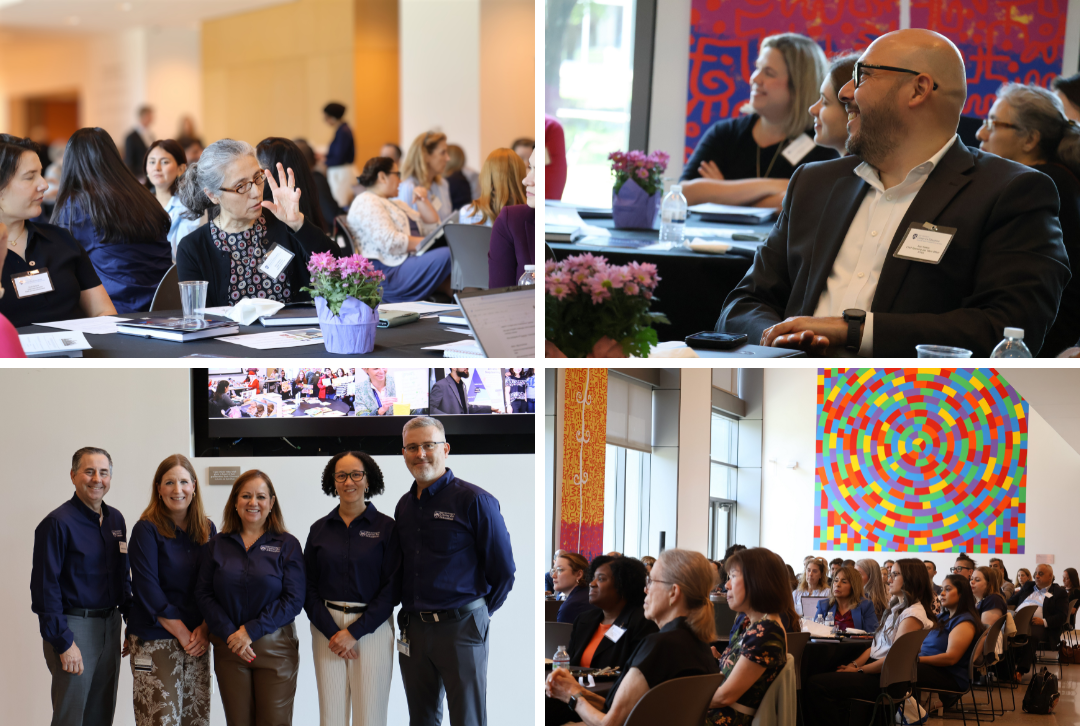
Following the presentation, the group participated in a moderated round-table discussion, answering questions regarding each participant's organizational needs, goals, collaboration opportunities and key considerations for Rice in providing support.
The discussions highlighted a shared need for stronger, more flexible support for teachers, school leaders, and education partners across EC-12. Participants emphasized the importance of high-quality professional learning, alternative certification pathways, bilingual and special education staffing, leadership development, and more accessible programming that fits district and campus needs.
A recurring theme was the challenge of teacher recruitment and retention, especially amid shifting accountability demands, certification requirements and financial barriers. Attendees also stressed the value of partnerships with Rice to expand mentoring, tutoring, summer learning and culturally responsive opportunities while making programs more visible, inclusive and easier to access for schools, families and communities.
“Hearing directly from our partners in education is essential,” said Rangel. “All that we’ve been able to accomplish since launching the strategic plan has been driven by their feedback, support and collaboration. But education is dynamic, so we have to continue this dialogue. The challenges we face are too complex for any one institution to solve alone, but together, we can continue building on this momentum and accomplish our shared goals.”
To learn more about Rice’s Center for Education, visit: centerforeducation.rice.edu.