


Summer should feel like a break, not a setback. For many Houston students, though, long months away from school can quietly chip away at hard-earned reading, writing and math skills, creating what educators call the “summer slide.” In this blog, we will look at what research tells us about summer learning loss, share local options to keep kids engaged and highlight how Creative Writing Camp can help your child return to school in the fall confident, inspired and ready to learn.
What is the “summer slide?”
When school lets out, kids get a much-needed break, yet long breaks can also create a “summer slide” in learning. Researchers have studied this pattern for more than a century and consistently find that many students lose ground over the summer, especially in math and reading.
A classic meta-analysis by Cooper and colleagues found that students can lose the equivalent of about one month of learning over summer vacation, with losses larger in math than in reading. For students from families with fewer enrichment opportunities, summer learning loss can reach as much as three months, which can account for up to two-thirds of the income-based achievement gap over time.
More recent work shows that the summer slide is still real in today’s schools, with many elementary students losing a noticeable share of their gains from the school year. Studies suggest that, on average, children may lose 25 to 34 percent of their math progress and 17 to 28 percent of their reading gains during summer break. Over several years, that can add up, making it harder for students to feel confident when they return each fall. And, while funding for studies such as those cited is focused on reading and math, it is reasonable to think the same can be said across all academics.
For Houston families, the good news is that summer does not have to mean lost learning. With some planning, it can be a season for growth, curiosity and new skills.
Houston's options to slow the summer slide
Houston offers many ways to keep kids learning, exploring and connected during the summer months. Below are several types of options that can work for different ages, interests and budgets.
- Creative writing and literacy camps
For many students, especially those who love stories or need a boost in language arts, creative writing camps provide a powerful way to keep reading and writing skills active during the summer. Creative Writing Camp, a collaboration between Writers in the Schools and Rice University’s School Literacy and Culture, has become a fixture of Houston area summer programming across its more than three decade history. - Library reading challenges and storytimes
Houston Public Library and Harris County Public Library branches host summer reading programs, teen events and family-friendly activities that encourage kids to read for fun and track their progress. These programs often include prizes, book lists and special events that make reading feel like a summer adventure, not homework. - Museum-based camps and workshops
Many Houston museums, such as the Houston Museum of Natural Science, the Children’s Museum Houston and the Museum of Fine Arts, offer summer camps that blend hands-on learning with play. These programs help children build science, art and critical thinking skills while exploring real-world topics, from space to ecology. - STEM and coding camps
Local universities, community organizations and private providers run STEM and coding camps where students can design robots, learn basic programming or work on engineering challenges. Research shows that targeted summer math and STEM programs can support achievement gains, especially when they include active problem solving and small group instruction. - Sports, arts and recreation programs
Parks and recreation departments, YMCAs, and arts organizations across Houston offer sports leagues, dance classes, theater workshops, and visual arts camps. These experiences support physical health, teamwork, creativity and social skills, which are all part of a well-rounded approach to learning. Check out some of Rice’s offerings! - Academic enrichment and tutoring
Some families may choose more structured academic programs, such as summer bridge classes, small-group tutoring, or subject-specific camps in reading, writing, or math. The most effective options tend to be targeted, engaging, and aligned with students’ current skill levels rather than one-size-fits-all.
Why creative writing is the ideal summer enrichment
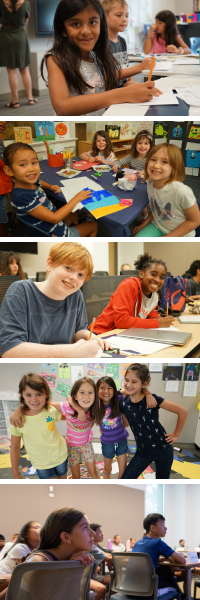
Writing is more than an academic requirement; it is a tool for thinking, communication and emotional expression. When students spend a week or more immersed in creative writing, they practice many of the same literacy skills that support success during the school year.
At Creative Writing Camp, students:
- Read mentor texts and examples, which keep reading fluency and comprehension active.
- Draft, revise and edit their own pieces, which strengthens grammar, spelling and organization.
- Share their work aloud and give feedback, which builds speaking, listening and critical thinking skills.
- Experiment with new genres and topics, which encourages risk-taking, creativity and problem-solving.
These experiences align with what research shows about effective summer learning: programs work best when they are engaging, focused and give students plenty of chances to practice key skills in meaningful ways. While a week or two of camp is not the same as a full semester, it can help counteract the typical slide in reading and writing by keeping children active as readers and writers. It also gives students an opportunity to explore passions without the rigid structures of test prep or the competing attention of other schoolwork.
Creative Writing Camp also supports parts of learning that are harder to measure but equally important. Instructors emphasize voice, identity, and confidence, helping students see themselves as authors whose ideas matter. For some campers, this can be a turning point that changes how they approach writing assignments when school starts again.
Get creative This summer!
Creative Writing Camp offers multiple one-week sessions, often running from June through early July. Camps are organized by age group, so a kindergartner’s day looks very different from that of a rising high school student, yet all share a common focus on creativity, collaboration and skill building.
Locations include the Rice University campus and partner schools across Houston, which makes it easier for families from different neighborhoods to participate. Each session ends with a celebration, where students share selected pieces with classmates and take home a portfolio of their work.
Because the camp is popular, sessions often fill quickly. Families are encouraged to review the current dates, grade-level options, tuition, and financial policies on the Creative Writing Camp website, and to register early!
Continue Exploring
Visit our blog for more stories and resources for educators.
Related Programs: School Literacy and Culture
Rice Continuing Studies: continue.rice.edu
As we work to expand access and enhance the social, educational and economic vitality of our community, our success is driven by those who share our vision and propel our progress. Learn more about how you can help move us forward.